Author Archives: Taras Lytvyn

About Taras Lytvyn

Supervisor of Blue Mountain Institute

The Mirror as a Teacher

Mirrors are common household items. They are used for dressing, for reflecting more light and for creating the feeling of a larger space. But mirrors also have negative aspects.

Mirrors can create false images and incite chaos and conflict. For example, a bedroom with mirrored closets often creates insomnia. Also, have you ever noticed that if you talk with a friend while sitting next to a full mirrored wall, the discussion often turns into an argument?

Continue reading

Square Table vs. Round Table

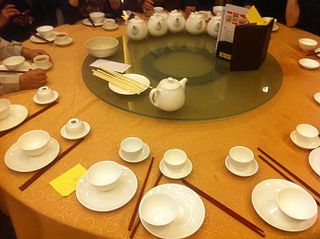
Is it better to have a round or square dining table?” In feng shui consultations, this is a frequently asked question. Naturally, which is better has a lot to do with the space; the surrounding furniture, the family structure, and the setting one is trying to create.

In consideration of any work, we always begin with the fundamental principles of yin and yang. What is dynamic and mobile is yang, while what is static and stable is yin. Hence, round shapes are yang and square or rectangular shapes are yin.

Continue reading

2014 – The Horse Year

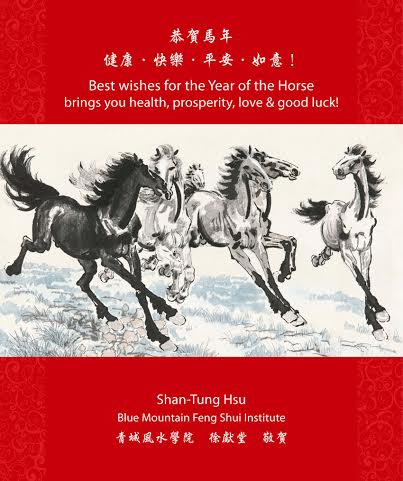
The Year of Stable Luck

The Snake is leaving, but before it leaves, it wants to show its power by swinging its tail so people will remember it.  This can be seen through the floods and cold spells in Europe; cold spells and droughts in the United States; the passing of respected people, like Nelson Mandela.  And now the Horse Year is arriving.

Continue reading

Flag of Ukraine


The recent unrest in Ukraine over its president Viktor Yanukovish backing out of a trade deal with the European Union, prompted one of my students in Kiev, to ask me about the national flag of Ukraine. How does the flag of Ukraine reflect the fate of the country? The flag is composed two equal sized blue and yellow bands. Originally, yellow on the top, now it is reversed and blue sits on top. Does this make any difference?

Continue reading

A Country of Miracles

There is a country with a land size of 35,900 Km square, 0.37 % of USA. It has a population of 23 million (7.35% USA). This country has no oil, iron, coal, gold, or mineral deposit, nor does it have any other noticeable natural resources.
Yet this country has accomplished:

GDP per capita: $37,000 (USA $49.800)
Foreign Reserve: 408 billion. It ranks No. 6 in the world, next to China, Japan, European Union, Saudi Arabia, and Russia.

Continue reading

What is Your Cup of Tea? (4)

Pu-erh tea grows in China’s Yunnan province. Its history can be traced back to the Han dynasty (206 B.C. – A.D. 220) but it became popular outside China only at the end of 20th century. Pu-erh tea is made from a large-leafed variety of tea. The buds and tender leaves are first converted to raw material called mao-cha (毛茶) by a process involving wilting, kneading, and drying in the sun. The mao-cha is then steamed and pressed into a compressed disk or brick form, then put in storage to allow a natural aging process to “mature” the tea.

Continue reading