The Monkey year, as predicted, has been very eventful, and it is now coming to an end. Although the remnants of the Monkey energy are tapering off as the New Year approaches, some of it will continue to remain through the transition.
In the Yin Yang theory, everything – every process, every transformation, and every object – has both a Yin and a Yang aspect. The Yin and Yang energy roles represent different qualities: Yang energy manifests outwardly, and tends to be aggressive, dynamic, initiating and expansive. Yin energy reflects inward, and tends to be subtle, responsive, unseen and withdrawing.
In communication, we often think strong delivery will help get the message through better. But in a very real sense, a soft, even whisper-like delivery, which is Yin, will tend to resonate more with the receiving entity, which is also Yin. This is why in many situations it is better to whisper.
All successful companies have a good logo. And logos often evolve along with the changing and development of the company. Recently, Instagram has changed its logo.
The reasoning of changing its logo was said to accommodate the evolving of the Instagram community over the past five years, from a place to share filtered photos to so much more —a global community of interests sharing more than 80 million photos every day.
Tai Chi Chuan (Taiji Quan) has been a popular health exercise for many centuries. Its popularity continues around the world. Although people practice tai chi to promote health, in its origin it is a form of martial art, a form of self defense.
My father’s only brother was ten years younger than my father. As a traditional older brother, my father felt a strong sense of responsibility for him. So when my uncle turned twenty, my father began to try to find him a wife. My uncle refused to get married and ran away.
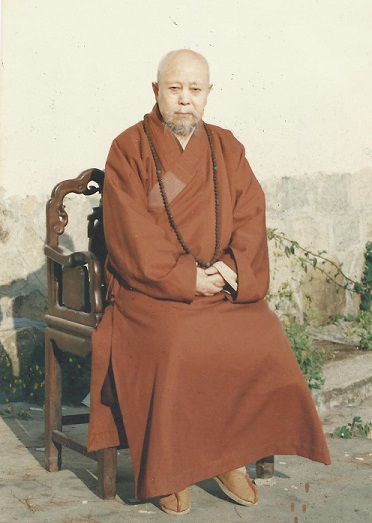
I formally became the disciple of Zen Master Pu Yu of Bubble Spring Temple on Drum Mountain in Fujian Province, China, right after the end of the Cultural Revolution in the late 1970’s. At that time, the temple had few monks and hardly any visitors. After the private ceremony, Master Pu Yu gave me a pep talk that has guided my life since. He talked about Zen tradition, the temple’s history, and also spoke more informally and personally to me.
Pu Yu was the 133rd head master of Yungquan (“Bubbling Spring”) Temple on Gu Shan (“Drum Mountain”) in Fuzhou, China. Established in the Tang dynasty, this monastery has over 1,200 years of history. I formally became his disciple in the late 1970s, just a few years after the end of the Cultural Revolution. At that time, due to the long suppression of religion in China, the temple had few monks and hardly any visitors. As a result, I was able to enjoy quite a bit of time with Master Pu Yu during my stay.
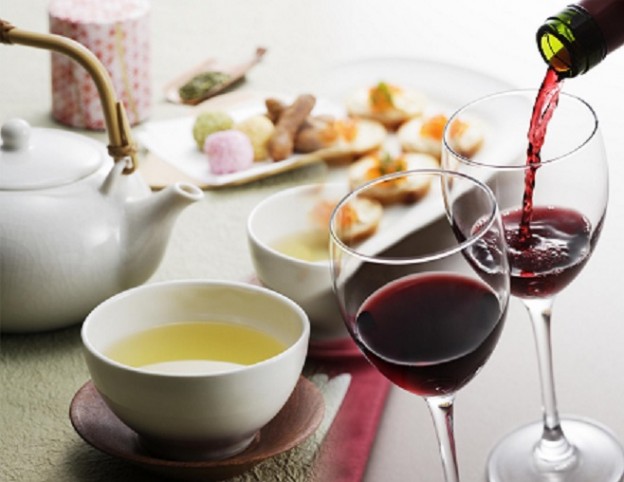
At first glance, tea and wine seem very different. Wine is made and stored as a liquid; tea is made and stored in the form of dried leaves. Wine is best aged while tea can be drunk fresh. Wine is served cold or at room temperature in a glass; tea is usually served hot in a ceramic cup. The temperature at which wine served is critical; tea can be served over a great range of temperature without losing its flavor. However, if we look at the art of wine tasting and compare it to the art of tea tasting, there are interesting similarities.
I was the youngest son among eight siblings (5 boys, 3 girls). In my childhood in Taiwan, my family was relatively well off. That was right after World War II. There were food shortages after the war. But we were fortunate because we had a big farm and hired many farm workers. So, we had plenty to eat.