Tag Archives: tea

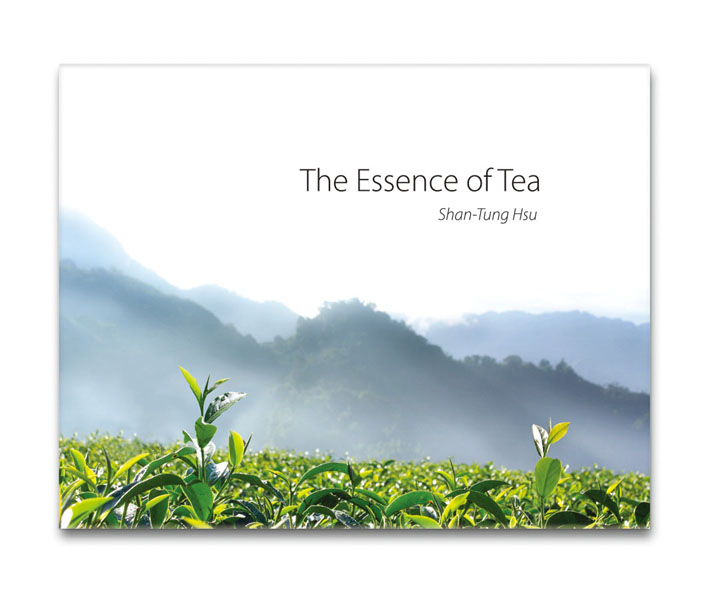
Dr Hsu book Essence of Tea

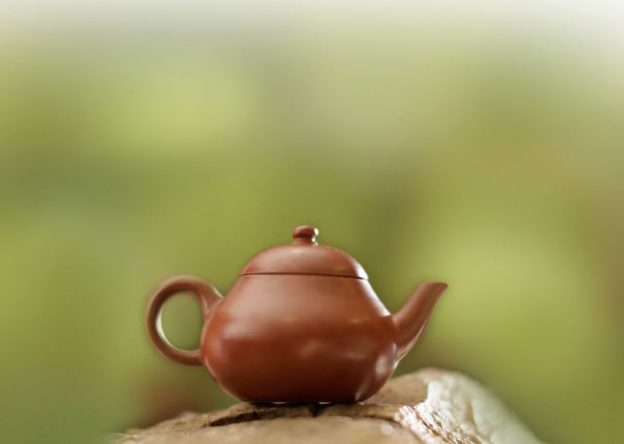
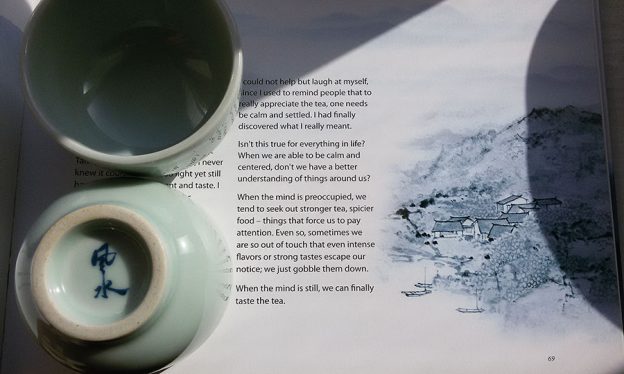
At One with Tea

Around the midpoint of my life, I found myself wondering whether I was on the right path. I considered whether I should change careers and set out on a new course. Around this time, I received a call from an old friend of mine in China who was a Taoist qigong healer. This friend told me that he had returned to the island where he was born, and he invited me to visit whenever I happened to be in China.
Continue reading

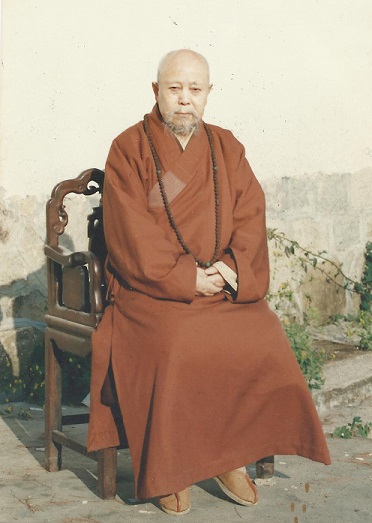
A Memory of Tea with Master Pu Yu

Pu Yu was the 133rd head master of Yungquan (“Bubbling Spring”) Temple on Gu Shan (“Drum Mountain”) in Fuzhou, China. Established in the Tang dynasty, this monastery has over 1,200 years of history. I formally became his disciple in the late 1970s, just a few years after the end of the Cultural Revolution. At that time, due to the long suppression of religion in China, the temple had few monks and hardly any visitors. As a result, I was able to enjoy quite a bit of time with Master Pu Yu during my stay.

Continue reading

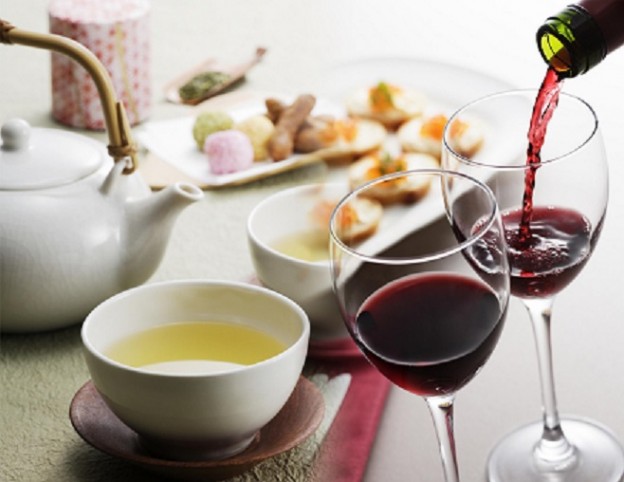
Tea and Wine

At first glance, tea and wine seem very different. Wine is made and stored as a liquid; tea is made and stored in the form of dried leaves. Wine is best aged while tea can be drunk fresh. Wine is served cold or at room temperature in a glass; tea is usually served hot in a ceramic cup. The temperature at which wine served is critical; tea can be served over a great range of temperature without losing its flavor. However, if we look at the art of wine tasting and compare it to the art of tea tasting, there are interesting similarities.

Continue reading

What is Your Cup of Tea? (4)

Pu-erh tea grows in China’s Yunnan province. Its history can be traced back to the Han dynasty (206 B.C. – A.D. 220) but it became popular outside China only at the end of 20th century. Pu-erh tea is made from a large-leafed variety of tea. The buds and tender leaves are first converted to raw material called mao-cha (毛茶) by a process involving wilting, kneading, and drying in the sun. The mao-cha is then steamed and pressed into a compressed disk or brick form, then put in storage to allow a natural aging process to “mature” the tea.

Continue reading

What is Your Cup of Tea? (3)

With green tea as an innocent, energetic teenager, and oolong tea as a sophisticated, mature lady, there must be a father figure in the tea family; it is an assertive gentleman– Black Tea.

Black tea, which the Chinese call “red tea” because of its rich red color when properly brewed, is a fully fermented tea.  With a strong full-bodied flavor and taste, black tea is the most consumed tea in the world.  It accounts for some 70% of all production and consumption.

Continue reading

What is Your Cup of Tea? (2)

Oolong tea is a partially fermented tea.  The process of making oolong tea is consider being the most exquisite and refined tea-making technique.  Oolong tea combines the mellow sweetness of black tea and the fresh fragrance of green tea.  From the point of the Yin-Yang theory, green tea is more yin, black tea is more yang.  Oolong tea being in-between, is the most balance variety of tea, harmonizing both yin and yang qualities.

Continue reading

What is Your Cup of Tea? (1)

There are over a couple hundred varieties of tea in China and there are many ways to classify them: by locality, by harvest season, by processing method, and by the form of the finished product. The varying characteristics of tea –color, aroma, taste, and form –are largely the result of enzymatic oxidation.  This process is traditionally called “fermentation,” even though it is not actually caused by yeast or other organisms.

Continue reading

Half of China

The last two months, I have had the rare luxury of not adding more frequent flyer miles to my account by staying in Seattle to diligently work on two books; Feng Shui:  Truths, Myths and Misconceptions and The Essence of Chinese Tea.

To give you a little taste of what’s to come, the story below is taken from my book The Essence of Chinese Tea. Hope you enjoy it!

Tea and Fengshui

Photo: Wikipedia

Continue reading