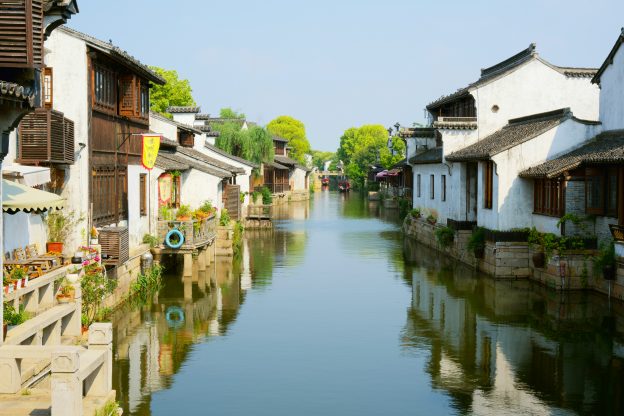
When people speak of Feng Shui today, they often think of furniture placement, wind chimes, lucky frogs, mirrors, or a so-called “wealth corner.” Yet traditional Feng Shui had nothing to do with decoration or superstition. It emerged as a practical body of knowledge concerned with one fundamental question: where and how should people live in order to survive.
At its core, the earliest practice of Feng Shui was the selection of an auspicious place to settle.
The Four Basic Needs
Ancient people oriented themselves around four essential requirements of survival.
1. Water:
Water was life itself. It was needed for drinking, fishing, transportation, and later for mills and irrigation. Archaeological evidence consistently shows that the earliest human settlements arose near rivers and lakes.
2. Food:
A settlement had to be close to sources of nourishment:
- animals for hunting,
- vegetation and fertile land for cultivation.
A suitable place had to sustain human life, not merely host it.
3. Shelter:
Building a home required materials: wood, straw, clay, stone. The surrounding environment needed to support the creation of shelter.
4. Security:
A settlement could not be vulnerable to flooding, wild animals, or enemy attacks. For this reason, people instinctively chose elevated ground, naturally protected by the landscape.
The Shift to Agriculture
With the transition to agriculture, another requirement emerged: flat, fertile land suitable for farming. Over time, an image of the ideal living environment took shape:
- flat land for dwellings and cultivation,
- water nearby,
- mountains or hills providing protection,
- a sense of natural stability.
It was in such places that communities formed, cities arose, and culture developed.
From Experience to System
This knowledge did not originate in books or abstract theory. It arose from thousands of years of observation and lived experience. Gradually, it was systematized and transmitted through images, metaphors, and symbols. Thus feng shui emerged as a coherent tradition.
Yet its essence remained unchanged: how to live in a space that supports life.
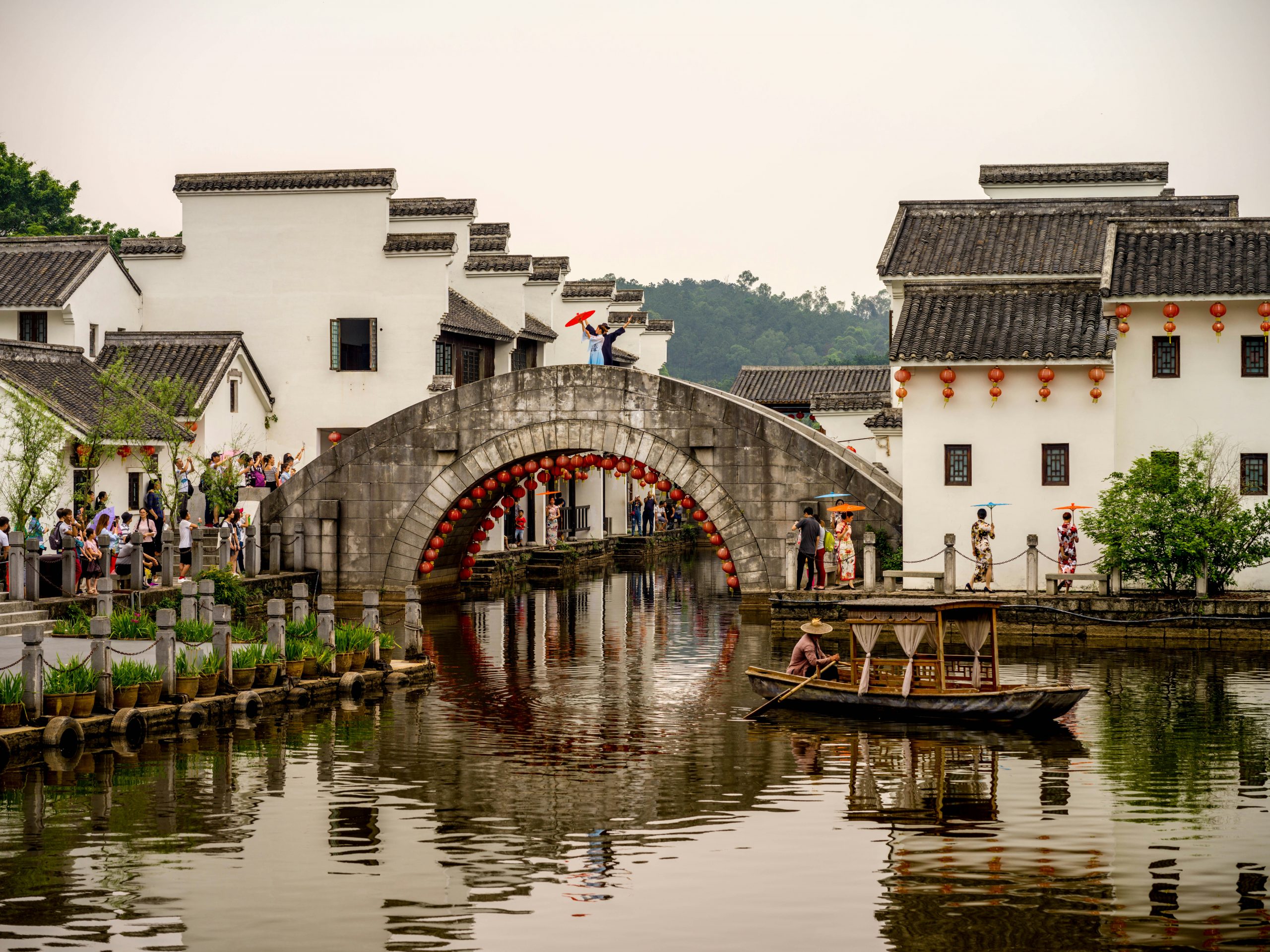
Photo: Matt Mu, Unsplash
Living and Lifeless Places
Ancient people also noticed something more subtle: not all places affect life in the same way.
- In some places, crops grow better.
- In others, people appear healthier.
- In some locations, one simply wants to live.
This invisible quality was called Qi (氣) – the vital energy of a place. If a location nourishes life, it is considered favorable for human beings. Qi cannot be seen directly, but it reveals itself through vitality, movement, and growth.
Balance and Resonance: Yin and Yang in Action
Feng Shui is grounded in natural law, particularly in Yin–Yang theory.
- Yin + Yang creates harmony.
- Yin + Yin, or Yang + Yang, creates resonance – amplification.
People intuitively apply this principle every day:
- in sports, where movement often follows a counterclockwise direction,
- in martial arts,
- even in the simple gestures used to switch things on and off.
Without knowing the terminology, we experience natural law through the body.

Photo: Quan You Zhang, Unsplash
Feng Shui and Natural Law
In the Chinese tradition, nature is not merely landscape. It is a unified rhythm of transformation that connects:
- heaven,
- earth,
- and humanity.
From this understanding emerged:
- Yin–Yang theory, which explains why change occurs,
- Five Element theory, which describes how change unfolds.
This comprehension and application of natural law became one of the foundations of the remarkable continuity of Chinese civilization.
Feng Shui Today
Feng Shui is not about magic or superstition. It is the language of nature, translated into the language of space. When we learn to understand it, we:
- choose living environments more wisely,
- relate more attentively to our surroundings,
- and restore our connection to the rhythm of the world.
Feng Shui is not something external. It is a reminder of how to live in resonance with life itself.